Raise It, Process It, Eat It: A Homesteader's Real-World Guide to Growing Your Own Meat
There's something deeply satisfying about sitting down to a meal where you know exactly where every bite came from. Not a label claim. Not a marketing promise. You raised it, you processed it, and you put it on the table yourself. That's the kind of food independence most homesteaders are chasing — and meat is often the missing piece.
Plants are a great starting point, but true self-sufficiency means protein, fat, and calories that don't depend on a grocery store supply chain. Whether you're working with half an acre or fifty, a well-planned homestead meat program is more achievable than most folks think. Let's break it down.
Start With the Right Animal for Your Setup
Not every homestead is ready for a beef steer, and that's perfectly fine. Matching your livestock choice to your land, budget, and experience level is the single most important decision you'll make.
Rabbits are the unsung heroes of small-scale homestead meat production. A single doe can produce 40–60 pounds of dressed meat per year. They're quiet, require minimal space (a few square feet of hutch per animal), and have a feed-to-meat conversion ratio that puts most livestock to shame. Startup costs are low — a basic breeding trio can be had for $50–$150 — and processing is something most people can learn in an afternoon. If you're brand new to raising animals for meat, rabbits are your on-ramp.
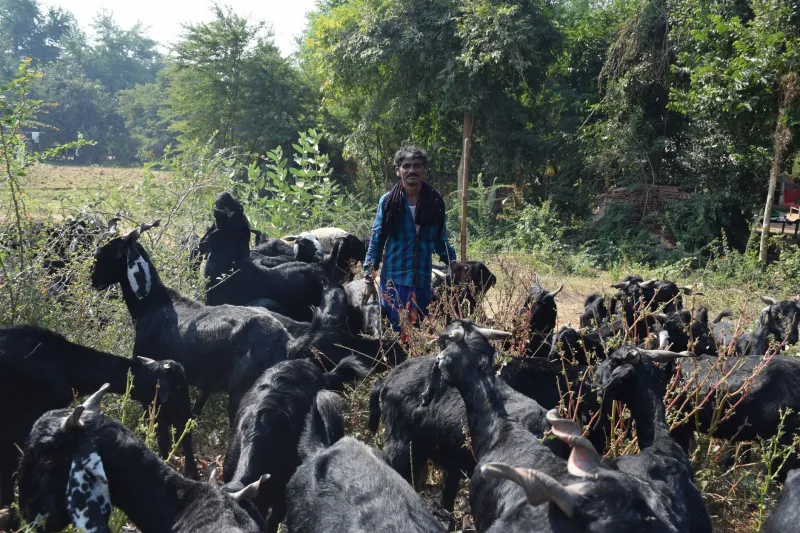
Meat goats (Boer and Kiko breeds are popular in the US) work well on rougher terrain where other animals struggle. A small herd of three to five does with a quality buck can yield several hundred pounds of meat annually. Goats are browsers, not grazers, so they'll happily clear brush while fattening up. Budget $200–$400 per quality breeding doe to start, plus fencing — and goats will test every inch of it.
Pigs are the homestead workhorses of the meat world. A single pig raised from a feeder piglet (typically 8 weeks old) to butcher weight (around 250 lbs live) takes roughly 6 months and yields 150–180 pounds of pork. Lard, bacon, chops, ham, sausage — pigs are the most versatile meat animal per square foot you can raise. Feeder pigs run $75–$150 each depending on your region, and feed costs average $1.50–$2.50 per pound of gain.
Beef cattle are the long game. A beef steer takes 18–24 months to reach butcher weight and requires significant pasture — at least 1.5 to 2 acres per animal on decent grass. The upside? A single steer yields 400–500 pounds of finished beef, enough to fill a chest freezer and then some. Startup costs are higher (expect $800–$1,500 for a quality feeder steer), but cost-per-pound when you factor in your labor often beats anything at the grocery store.
The Real Cost-Benefit Breakdown
Let's be honest: homestead meat production isn't always cheaper in year one. You're paying for infrastructure, learning curves, and breeding stock. But the math shifts dramatically over time.
A family of four eating modest amounts of pork might spend $600–$800 per year at the grocery store. Two feeder pigs, raised on kitchen scraps, garden waste, and supplemental feed, can produce the same volume of pork for $300–$450 all-in — and that's before you factor in the quality difference. Pasture-raised, non-GMO-fed, humanely handled meat simply isn't available at any price in most supermarkets.
The breakeven point for most small-scale operations falls somewhere between year two and year four, after initial infrastructure is paid off. After that, you're eating better for less.
Humane Practices Matter — For the Animal and for You
If you're going to raise animals for food, they deserve a good life right up until the end. This isn't just an ethical position — it's practical. Stressed animals produce lower-quality meat. Animals that live well, eat well, and aren't constantly anxious yield better flavor, better texture, and better fat profiles.
Give your animals space appropriate to their species. Feed them well. Handle them regularly so they're calm around humans. When butcher day comes, work quickly and confidently. A clean, low-stress harvest is something every serious homesteader should learn to do with skill and intention.
Many homesteaders choose to process animals themselves — especially rabbits, chickens, and pigs. It's a skill worth developing. Others use a USDA-inspected local processor for larger animals like cattle and hogs. Either approach is valid. What matters is that you know what's happening and you're in control of the process.
Know Your State's Laws Before You Start
This is the part most beginner guides skip, and it matters. Regulations around home slaughter, custom processing, and selling meat vary significantly by state.
For personal use, most states allow you to slaughter animals on your own property with minimal restrictions. You generally cannot sell this meat commercially without going through a USDA-inspected facility.
For selling direct to consumers, many states have "custom exempt" provisions that allow small processors to handle animals for the owner's personal use. Some states have expanded cottage food-style laws that allow limited direct-to-consumer meat sales. Others are much more restrictive.
Before you invest in a breeding program with the goal of selling meat, check with your state's Department of Agriculture. The USDA's Food Safety and Inspection Service (FSIS) website also maintains state-by-state guidance. Getting this wrong can be expensive.
Building Your Processing and Preservation Infrastructure
Raising the animal is only half the equation. Once it's harvested, you need a plan for handling, processing, and storing the meat — and that requires some investment in the right gear.
At minimum, you'll want a quality chest freezer (or two). A 7-cubic-foot chest freezer holds roughly 245 pounds of meat and costs $200–$300. For a family serious about meat independence, two of these running in a basement or outbuilding is a reasonable baseline.
For processing, a good set of boning knives, a meat saw or reciprocating saw, and a sturdy stainless steel table go a long way. If you're getting into sausage making — and you should — a hand-crank or electric meat grinder and a sausage stuffer are worth every penny.
Beyond freezing, consider curing and smoking. Bacon, ham, and cured sausages extend your meat supply without electricity and add tremendous variety to your homestead diet. A simple cold smoker can be built from scrap lumber for under $50, or you can invest in a quality offset smoker that does double duty for backyard cookouts.
Pressure canning is another powerful tool. Home-canned pulled pork, venison stew, and bone broth are shelf-stable for years and completely independent of the power grid.
A Practical Timeline for Getting Started
If you're starting from scratch, here's a reasonable first-year roadmap:
- Months 1–2: Research your state's regulations. Set up basic infrastructure (fencing, housing, water systems).
- Month 3: Acquire your first animals. Rabbits or feeder pigs are ideal for beginners.
- Months 4–8: Raise your animals. Learn their habits, needs, and behavior.
- Month 6–9: Harvest and process. Invest time in learning proper technique.
- Ongoing: Evaluate what worked, what didn't, and scale accordingly.
Year two, you add a second species. Year three, you're running a real rotation. Within five years, many homesteaders find they've largely exited the industrial meat system entirely.
The Bottom Line
Building a homestead meat program takes time, money, and a willingness to learn hard skills. But the payoff — in food quality, cost savings, and genuine independence — is real. You're not just filling a freezer. You're building a food system that answers to you and nobody else.
That's what homesteading is all about.