Wool, Warmth, and Worth: The Case for Adding Sheep or Alpacas to Your Homestead
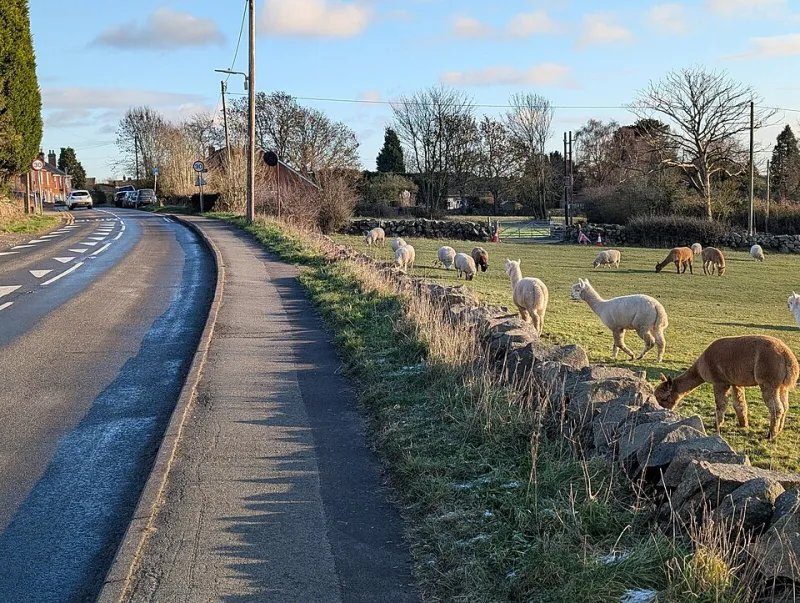
Photo: Mat Fascione , CC BY-SA 2.0, via Wikimedia Commons
When most people think about homestead livestock, chickens and goats come to mind first. Maybe pigs. Fiber animals — sheep, alpacas, and their cousins — tend to get overlooked, written off as too niche or too complicated. That's a shame, because few animals offer the combination of low daily maintenance, renewable output, and value-added potential that a small fiber flock brings to a working homestead.
If you've got a few acres, a little patience, and an interest in learning a genuinely old-world skill, this might be the livestock decision that changes how you think about self-sufficiency.
Why Fiber Animals Deserve a Second Look
Here's the thing about wool and alpaca fiber: it's a product that literally grows back every year. You're not harvesting an animal's life for a one-time yield. You're building a relationship with an animal that produces something valuable — renewable, natural, and increasingly in demand — season after season.
In a market where handspun yarn, artisan fiber, and locally sourced wool products are commanding serious prices, small-scale fiber operations have real economic legs. A single Rambouillet ewe can produce 10–14 pounds of fleece annually. A well-kept alpaca might yield 5–10 pounds of some of the softest fiber on the planet. At raw fleece prices ranging from $10–$30 per pound for quality fiber (and considerably more for processed or hand-spun yarn), the math starts to get interesting quickly.
Choosing the Right Animal for Your Region
The first decision is whether you're going with sheep, alpacas, or potentially both. Each has its strengths, and regional climate plays a significant role in that choice.
Sheep are adaptable, hardy, and widely raised across the US. For fiber production specifically, a few breeds stand out:
- Merino and Rambouillet produce fine, soft wool ideal for next-to-skin garments. They do well across much of the country but prefer drier climates. Popular in the Mountain West and Plains states.
- Corriedale is a dual-purpose breed (wool and meat) that handles a wider range of climates, making it a great starter breed for beginners in the Midwest or Southeast.
- Icelandic sheep are exceptionally cold-hardy and popular in the Upper Midwest and New England. Their dual-coated fleece is versatile for both fine and coarse fiber projects.
- Lincoln Longwool produces long, lustrous locks well-suited for spinning and weaving, thriving in the humid conditions of the mid-Atlantic and Pacific Northwest.
Alpacas are a different proposition — quieter, gentler on pasture than sheep, and producers of fiber that's naturally hypoallergenic and lanolin-free. They're popular with homesteaders who want to market fiber directly to hand-spinners and crafters, since alpaca commands a premium price. Huacaya alpacas (the fluffy, crimped variety) are the most common in the US. Suri alpacas produce a silkier, drapier fiber with a more limited but passionate market.
Alpacas are herd animals and must be kept in groups of at least two — ideally three or more. They're relatively low-drama compared to sheep but do require regular nail trimming, annual shearing, and some vigilance around heat stress in hot climates.
What Does Shearing Actually Involve?
Shearing is the annual centerpiece of any fiber operation, and it's one area where new fiber farmers often underestimate the learning curve. Sheep need to be shorn once a year (some breeds twice), typically in spring before temperatures climb. Alpacas are also shorn annually.
You have two options: hire a professional shearer or learn to do it yourself. Professional shearers typically charge $10–$20 per animal for sheep and $25–$40 per alpaca. For a small flock of five to ten animals, that's a manageable annual cost, and a skilled shearer will do the job faster and with less stress on the animal than most beginners.
That said, learning to shear — or at least to skirt and sort a fleece — is a valuable skill. Skirting means removing the lowest-quality edges of a raw fleece (the stained, matted, or heavily vegetable-contaminated portions) before selling or processing. It's not glamorous work, but it directly affects the value and usability of your fiber.
From Raw Fleece to Real Money
The simplest approach is selling raw, skirted fleece directly to hand-spinners. There's a robust market for quality raw fleece on platforms like Etsy, at fiber festivals, and through local spinning guilds. Prices for premium raw fleece can reach $20–$35 per pound — which means a single Rambouillet ewe's annual clip could bring in $150–$300 before any processing.
Step up the value chain by sending your fleece to a fiber mill for processing into roving or yarn, and your per-pound returns climb significantly. Custom-milled yarn from a recognized local breed or a farm with a good story behind it can retail for $25–$45 per skein at farmers markets and craft fairs.
For homesteaders who enjoy working with their hands, learning to spin on a drop spindle or wheel opens the door to keeping processed fiber for personal use — homespun socks, sweaters, and blankets that carry a value far beyond what you'd pay at any store.
Pasture and Daily Care: Less Than You Think
One of the most persistent myths about sheep and alpacas is that they require significant acreage. In reality, sheep can be kept at roughly 4–8 animals per acre of good pasture, and alpacas are even lighter on land — 5–10 per acre is reasonable with rotational grazing. A 2-acre homestead with good grass management can comfortably support a small starter flock.
Daily care is genuinely minimal compared to many other livestock. Fresh water, access to quality hay (especially in winter), a mineral supplement, and a simple three-sided shelter are the basics. Sheep are prone to foot rot in wet conditions, so pasture drainage matters. Alpacas are susceptible to heat stress, so shade and fresh water in summer are non-negotiable.
The Part Nobody Talks About: The Mental Health Angle
This might sound soft, but it's worth saying plainly: fiber crafting is good for people. The rhythmic, meditative quality of spinning, knitting, or weaving has been documented to reduce stress and anxiety. Plenty of homesteaders who started raising sheep for practical reasons have found that the fiber work itself — sitting at a wheel after a long day, turning raw fleece into something beautiful and useful — has become one of the most grounding parts of their routine.
In a culture that moves fast and rewards distraction, there's something quietly radical about a craft that demands presence, patience, and attention to texture and rhythm.
Startup Costs and What to Expect
Honesty matters here. Fiber animals are not a get-rich-quick proposition. A quality breeding ewe can run $200–$500. Registered alpacas are considerably more expensive — $500–$2,000 for a good fiber-quality female is realistic. Add fencing, a basic shelter, initial hay supply, and a mineral setup, and a starter operation of four to six animals might run $2,000–$5,000 to establish properly.
Breaking even typically takes two to four years, depending on whether you're selling raw fleece, processed fiber, or finished goods. The homesteaders who do best financially are those who add value at every step they can — selling yarn instead of roving, selling finished goods instead of yarn, and building a small but loyal customer base who knows and trusts their farm.
For most people who take this path, though, the financial return is only part of the equation. The self-sufficiency angle — producing your own fiber for clothing, blankets, and gifts — carries a value that doesn't show up in any profit-and-loss statement. And that, at the end of the day, is what homesteading is really about.