Wild and Free: How to Build a Foraging System That Feeds Your Family and Funds Your Homestead
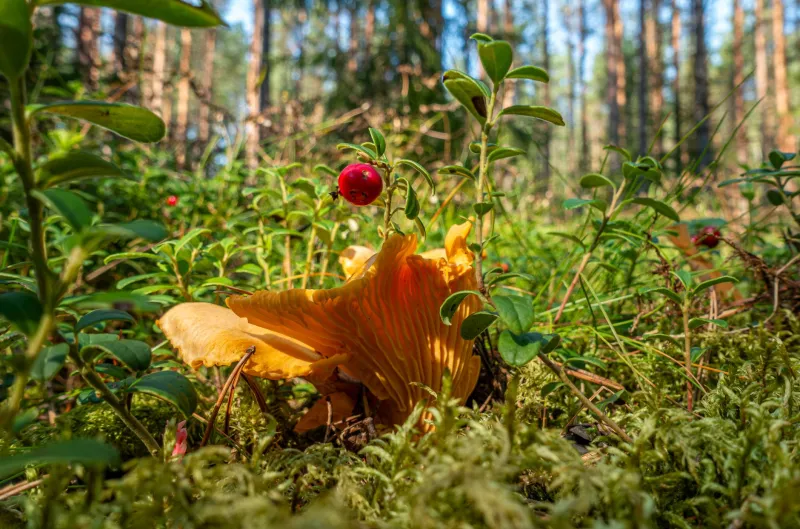
Walk the edges of almost any rural property in America and you'll pass food without knowing it. Wild ramps tucked under a canopy of hardwoods. Clusters of elderberries drooping along a fence line. Black walnuts and hickory nuts scattered across a dirt lane. Chanterelles pushing up through leaf litter after a good rain. Most folks walk right by all of it.
But the homesteaders who pay attention? They're stocking their pantries for free, selling at farmers markets, and building the kind of deep land knowledge that money genuinely can't buy. Foraging isn't a hobby for survivalists or a trend for foodies — it's a legitimate food production system that pairs naturally with everything else you're already doing on your property.
Here's how to build it out the right way.
Start With a Field ID Library (And Take It Seriously)
The first rule of foraging is simple: if you're not 100% sure what it is, you don't eat it. That's not fear-mongering — it's just common sense. Some of the most dangerous plants in North America have edible lookalikes, and the consequences of a bad ID can be serious.
Build a reference library tailored to your region. Samuel Thayer's Nature's Garden and Forager's Harvest are two of the most respected field guides available, covering North American species with real depth. Peterson Field Guides offers region-specific volumes. The Audubon Society guides are solid too. For mushrooms specifically, All That the Rain Promises and More by David Arora is a cult classic that's genuinely useful in the field.
Don't stop at books. Join a local foraging group or mycological society — most states have at least one, and they run identification walks that are worth more than any book. Apps like iNaturalist let you photograph finds and get community-verified IDs. Use them as a starting point, not a final answer.
Make a habit of documenting everything you harvest: photos, location, date, habitat type, and what confirmed your identification. That record becomes a resource you'll use for years.
Map Your Land Like a Forager
Before you can build a reliable harvest system, you need to know what's out there. Spend a full season — ideally a full year — just walking and observing. Note what species appear where, when they peak, and how abundant they are.
Divide your property and the surrounding areas you have access to into zones. Edge habitats (where woods meet fields) are almost always the most productive. Creek banks and wet areas produce different species than dry upland ridges. South-facing slopes warm up faster and push early spring greens ahead of schedule.
Make a seasonal calendar. Ramps and watercress come in early spring. Morels follow shortly after. Elderflowers bloom in early summer, berries ripen through July and August, and fall is prime time for nuts, late mushrooms, and roots. When you know your land's rhythm, you can plan harvests the way you plan a garden — intentionally, not accidentally.
Know the Legal Landscape Before You Pick
Foraging on your own property is straightforward — you own what grows there. But foraging on public land is regulated, and the rules vary significantly depending on who manages the land.
National Forests generally allow personal-use foraging within limits, though commercial harvesting usually requires a permit. State parks often prohibit removal of any natural materials. BLM land tends to be more permissive but always check current regulations for the specific unit you're accessing. Private land requires explicit permission from the landowner — always.
If you're planning to sell foraged goods commercially, look into your state's regulations on wild-harvested food sales. Some states allow direct-to-consumer sales of foraged products without a license; others require permits or restrict certain species. Your state's department of agriculture website is the right starting point.
Harvest Smart — For This Year and Next
Sustainable harvesting isn't just an environmental talking point. It's practical self-interest. Overharvest a ramp patch or a chanterelle spot and you may not have one next year. The old forager's rule — take no more than a third — is a reasonable starting point, though some species can handle more pressure and others need even gentler treatment.
For leafy greens and herbs, harvest from the outer growth and leave the root system intact. For berries, leave plenty on the plant for wildlife and seed dispersal. For mushrooms, cut at the base rather than pulling, which disturbs the mycelium less. For nuts, gather what's fallen naturally rather than stripping the tree.
Rotate your harvest spots. If you picked ramps heavily from a patch this spring, leave it alone next year and let it recover. The patches that produce reliably for decades are the ones that were treated with care.
Preservation Is Where the Real Value Lives
Raw foraged food has a short window. The real leverage comes from preserving the harvest in ways that extend its value across months or even years — and that open the door to selling finished products rather than raw ingredients.
Dehydration is one of the most versatile methods. Dried mushrooms — chanterelles, hen of the woods, chicken of the woods — reconstitute beautifully and command solid prices at market. Dried elderberries, rose hips, and wild herbs have strong demand in the herbal supplement and tea market.
Canning wild berry jams and jellies is a natural fit for homesteaders already set up for food preservation. Wild blackberry, elderberry, and pawpaw preserves sell well at farmers markets and through online platforms. Foraged herb infusions, wild fruit vinegars, and elderflower cordials are value-added products with real margin.
Tinctures and herbal preparations fall into a different regulatory category — be careful about health claims if you're selling these commercially. Stick to describing flavor and traditional use rather than making medical claims.
For the pantry, consider lacto-fermenting ramps and other wild alliums, making hickory nut oil, or rendering black walnut into baked goods. These aren't just preservation strategies — they're ways to build a genuinely distinctive food identity around what your specific land produces.
Turning Foraging Into Income
There's a real market for wild-harvested and wild-inspired products, especially among consumers who want something genuinely local and outside the industrial food system. Farmers markets are the obvious starting point, but they're not the only option.
Restaurant chefs — particularly those running farm-to-table menus — often pay premium prices for wild mushrooms, ramps, and specialty foraged items. A single relationship with the right chef can move a significant portion of your harvest. Reach out directly, bring samples, and be reliable about supply and quality.
Online sales through platforms like Etsy work well for shelf-stable products: dried mushrooms, wild herb blends, foraged jams, and teas. A small homestead brand built around your wild harvest has genuine appeal in today's market.
Foraging walks and educational experiences are another angle entirely. If you've built real knowledge of your land and local species, people will pay to learn from you. Day workshops, guided walks, and identification classes can generate meaningful income while sharing skills that matter.
The Deeper Return
Here's the thing that doesn't show up on a spreadsheet: the land knowledge you build through serious foraging is one of the most valuable assets a homesteader can have. When you know what grows where, when, and why, you understand your land at a level that changes how you manage it. You start seeing the whole system — not just the fields you planted, but everything growing wild around them.
That knowledge feeds your family, funds your operation, and connects you to the land in a way that's hard to put a price on. The pantry gets stocked. The income stream gets built. And the education never really stops.
Get out there and start looking. The harvest is already waiting.