Stop Bleeding Watts: A Homesteader's DIY Energy Audit That Pays for Itself Fast
Here's an uncomfortable truth most off-grid homesteaders eventually bump into: adding more solar panels isn't always the answer. Sometimes the better move is figuring out where all that hard-won power is quietly disappearing before you spend another dime on generation capacity.
An energy audit sounds like something you hire a professional to do — clipboard in hand, blower door test, thermal imaging camera. And sure, that option exists. But a solid DIY audit, done methodically over a weekend or two, can surface 80% of the same problems for about the cost of a decent multimeter and a kill-a-watt meter. For homesteaders already stretching every dollar, that trade-off is a no-brainer.
Let's walk through how to actually do it.
Start With the Numbers, Not the Hardware
Before you touch a single light switch, pull together whatever data you have on your power system. If you're running a solar setup with a battery bank, most modern charge controllers and inverters log daily production and consumption. Download or write down a few weeks' worth. Look for patterns — days when consumption spiked without an obvious reason, times when your battery bank was draining faster than the sun was putting back in.
If you don't have a monitoring system, that's actually your first fix. A basic battery monitor like a Victron BMV series unit runs well under $100 and will immediately show you whether your system is healthy or quietly hemorrhaging power overnight. Phantom loads — the slow, invisible drain from devices left plugged in or on standby — are one of the biggest culprits on homesteads, and you simply can't fight what you can't measure.
Once you have baseline numbers, you're ready to go hunting.
Walk Every Circuit With a Kill-A-Watt Meter
A kill-a-watt meter (around $20–$30 at most hardware stores) plugs between any appliance and the outlet and shows you real-time wattage draw. Go room by room, outbuilding by outbuilding, and test everything that stays plugged in. The results are often genuinely surprising.
Old chest freezers are notorious offenders — a 20-year-old unit can draw three to four times what a modern energy-efficient model uses. Older well pumps, battery chargers left plugged in, that second refrigerator in the shop, the television that never fully powers off — they all add up. Write down the wattage and estimated daily hours of use for each device. You're building a consumption map, and you'll use it to prioritize where your effort actually pays off.
For hardwired appliances — water heaters, HVAC units, well pumps — a clamp meter on the circuit breaker panel gives you amperage draw, which you can convert to wattage easily. This step alone has helped plenty of homesteaders discover that a single misbehaving appliance was quietly eating 20–30% of their daily solar harvest.
Tackle the Thermal Envelope — It's Not Just for the House
Energy audits on homesteads aren't just about electricity. Heat loss is energy loss, and it hits your off-grid system hard whenever your electric heaters, heat pumps, or propane systems have to work overtime to compensate.
On a cold morning, walk slowly around your home and outbuildings with your hand extended near window frames, door seals, electrical outlets on exterior walls, and any place where pipes or wires penetrate the building envelope. Drafts are easy to feel. If you want to get more precise, a basic infrared thermometer (not the same as a full thermal camera, but useful) can highlight cold spots on walls and ceilings.
Common problem areas on rural homesteads include:
- Barn and workshop doors that no longer seal properly after years of settling
- Crawl spaces and rim joists on older farmhouses that were never properly insulated
- Attic hatches that are just bare wood with zero insulation value
- Recessed lighting fixtures that open directly into unconditioned attic space
- Pipe and wire penetrations that were never foamed or caulked after installation
Fixing these with spray foam, weatherstripping, and rigid foam board insulation costs very little but can dramatically reduce how hard your heating and cooling systems have to work — which translates directly to lower electrical demand on your battery bank.
Audit Your Solar and Battery System Itself
Your generation and storage equipment can develop hidden inefficiencies over time. A few things worth checking:
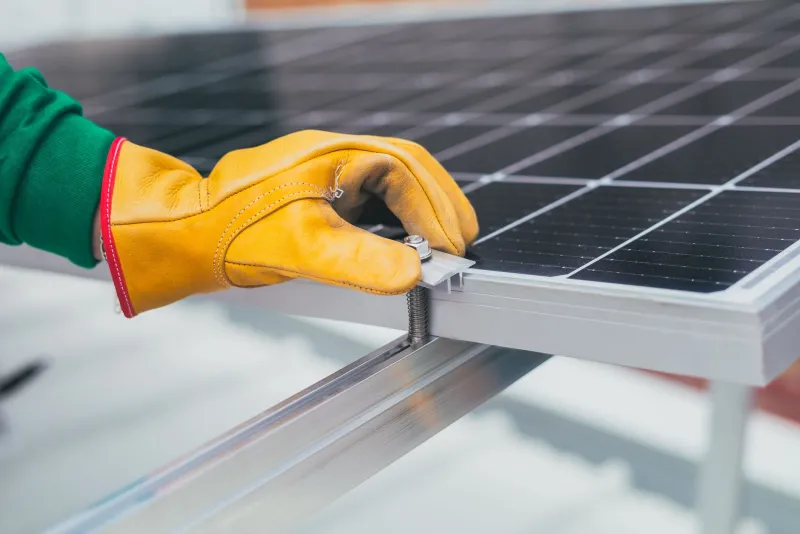
Panel cleanliness and shading. Dust, bird droppings, or even partial shading from a tree branch that's grown in over the past season can reduce panel output by 10–25%. Clean panels with water and a soft brush, and assess whether any new shading has crept in.
Battery bank health. Lead-acid batteries that have been undercharged repeatedly lose capacity without warning. If you have a flooded lead-acid bank, check specific gravity in each cell with a hydrometer. Lithium systems usually report state of health through their BMS. A battery bank running at 60% of its rated capacity because of aging or sulfation is a hidden power shortage you're compensating for every single day.
Wiring and connections. Corroded or loose connections in DC wiring create resistance, which turns electricity into heat instead of useful power. Check every terminal connection in your system — at the panels, the combiner box, the charge controller, and the battery bank. A little dielectric grease and a wrench can recover surprising amounts of efficiency.
Charge controller settings. Many homesteaders set their charge controller up once and never revisit it. If your absorption and float voltages aren't tuned correctly for your battery type and current age, you may be chronically undercharging your bank, which shortens its life and reduces available capacity.
Prioritize Like a Homesteader, Not an Engineer
Once you've got your list of issues, resist the urge to fix everything at once. Instead, rank improvements by two factors: cost to fix and watts recovered. Replacing a $0.50 piece of weatherstripping that stops a major draft is a better first move than buying a new $800 chest freezer, even if the freezer would save more power in the long run.
A simple priority framework:
- Fix phantom loads first — unplug anything that doesn't need to stay on. Zero cost, immediate results.
- Seal air leaks — caulk, foam, and weatherstrip. Materials cost $20–$50 and the impact is immediate.
- Address the biggest single-appliance offenders — replace or retire the worst performers when budget allows.
- Optimize the solar system — clean panels, fix connections, recalibrate settings before spending on new equipment.
- Upgrade insulation — bigger project, bigger payoff over time, but requires more planning and investment.
The Real Payoff
A thorough DIY energy audit typically surfaces enough waste that most homesteaders can cut their daily consumption by 25–50% without adding a single watt of new solar capacity. That means your existing battery bank lasts longer, your system handles cloudy stretches better, and you're genuinely more self-sufficient — not just better equipped.
Self-sufficiency isn't just about what you can produce. It's about not wasting what you already have. And that's a principle any homesteader can get behind.